- Check on the finances
If you are a cash buyer, make sure your funds are available to pay the deposit, as the dealer will require a deposit to confirm the sale. If a loan is required, then do some research into what the banks or other loan sources have on offer. Some dealers may well have an easy-to-understand finance plan, but long term it may cost more than something organised personally.
Along the same lines, it’s also handy to have a few insurance quotes lined up. Apart from anything else, that will give something to discuss, should the dealer have any insurance on offer.
- Get the feel of the motorhome
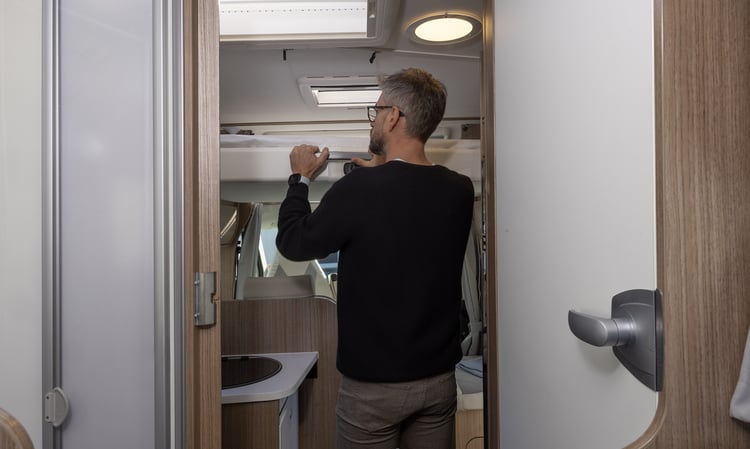
After arriving at the dealership, spend time looking over the prospective motorhome. Sit inside the motorhome and go through the motions of motorhome living. That might sound a bit silly, but the old hands will know that it’s not wasted time, particularly in smaller motorhomes. Since many a leisure hour is going to be spent in your pride and joy, it’s important to get the comfort and convenience factors right. Check all the furniture and fittings as well as the equipment. Even brand-new motorhomes may have poorly fitted hinges or other quality issues. Ask all the questions of the salesperson that you can think of.
- Have a drive
New motorhomes these days tend to have European cab chassis underpinnings. Think Fiat Ducato, Mercedes Benz Sprinter, Volkswagen Crafter, Iveco Daily which are all car-like light commercial vehicles. Even so, a test drive in as many varied conditions as possible is highly recommended, especially if you're not familiar with motorhomes.
- Consider add-on options
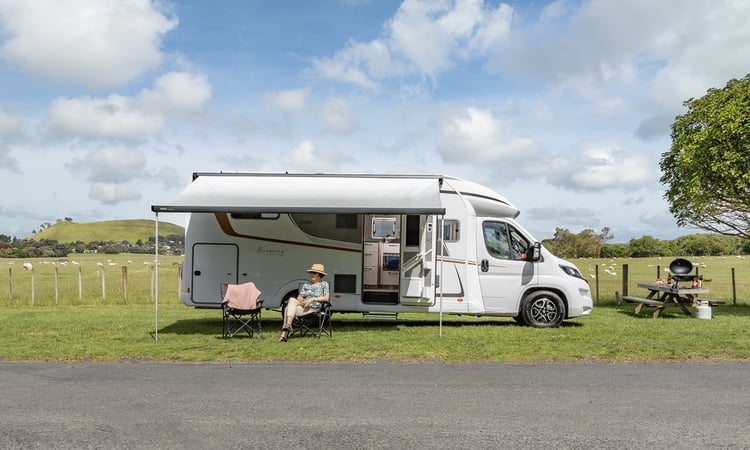
At this point, it’s good to consider any options that might be available. Motorhomes tend to be well appointed these days but there are still items like solar panels, satellite dishes and bike racks that could be added on.
Find out what to look for when buying a used motorhome with solar panels.
- Document import compliance
In New Zealand, there are a number of compliance checks that are required on imported motorhomes, even new ones.
Any motorhome for sale should have the following:
-
Gas and electrical certification. Read more about safety requirements for motorhomes here.
-
Pre-Delivery Inspection (PDI) from the cab chassis manufacturer. For instance, in the case of Fiat, a motorhome importer should send the motorhome straight from the wharf to the local Fiat importer, who does the inspection. If this isn't completed, the Fiat warranty is void.
-
Warranty registered with the base vehicle manufacturer, e.g., Fiat, and motorhome manufacturer, e.g., Carado.
All those items should be documented, and you should request proof. Neither the self-contained certification nor the gas and electrical certification will affect the warranty, but will affect your ability to use the motorhome. The lack of a pre-delivery inspection and manufacturer's warranty registration will have consequences for the owner’s warranty.
-
- Understand the warranty
Warranty is sometimes an area of contention. Make sure the warranty conditions are fully understood. There may be different time frames on the cab chassis, the motorhome structure, water tightness, and house batteries. Again, ask any questions, particularly if there are any conditions attached to the warranty, like servicing.
Finally, it’s time to negotiate on price. Something to be done in your own inimitable style.
Related read: Top Ten Questions to Ask Dealers When Buying a Motorhome in NZ.
What should you look for when Buying a New Motorhome in New Zealand?
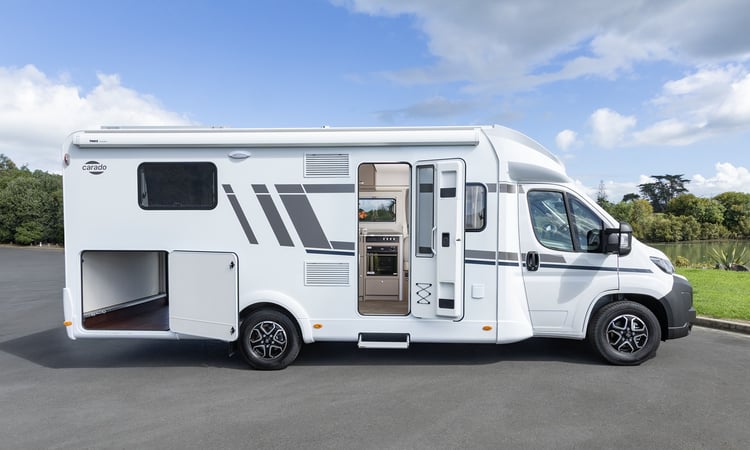
When purchasing a new motorhome, your main priority should be verifying its import documentation, domestic compliance certifications, and factory warranty protections.
Let’s assume here that you have done some preliminary research into dealers and available motorhomes, and you are now interested in a motorhome at a particular dealership.
Here are some things to consider before you make the big decision:
How do you Complete Due Diligence on a Used Motorhome from a Dealer?
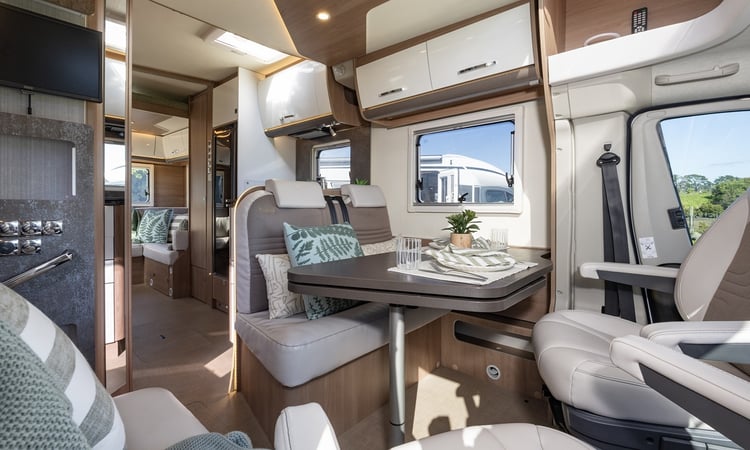
Conducting due diligence on a used motorhome requires an independent mechanical inspection, an appliance functionality check, and verification of up-to-date gas and electrical safety certificates.
Buying your vehicle from an MTA-assured dealer like Wilderness Motorhome Sales provides legal safety under the Consumer Guarantees Act, ensuring all onboard systems are fully serviced and road-ready before the sales agreement is finalised.
The process for buying a used motorhome from a dealership is much the same as buying a new motorhome, with a few additions.
- Check the condition of motorhome
On the motor part of the motorhome, tyres, windscreen, oil/coolant levels and lights, should be checked for either condition or functionality. On the body, items that should be looked out for are correct fitting door, windows, seals, corrosion, accident damage, water leaks and dodgy repairs. Where possible an appliance check is a must, as is ensuring the vehicle has the necessary electrical and gas certification. Also check for any special features the previous owner might have done - this especially applies to custom built motorhomes.
- Take a test drive
Just like a new vehicle, taking a test drive is essential. However, as well as ensuring it’s a vehicle you like to drive, it’s an opportunity to determine how good the mechanicals, like the engine, gearbox, brakes, and cooling system, are. At the same time, make sure that items like windscreen wipers, heaters, and cab air conditioners are working. In addition to that, an extended test drive is recommended, and also tune in a listening ear to the squeaks, rattles, and other noises that are often present in motorhomes. Some items like hob/grill rattles, and road noises coming through the habitation door are easily fixable, but others may be harder to trace and fix, or alternatively, just live with.
Check out our Ultimate Guide to Test Driving a Motorhome from a Dealership. - Check through any documentation
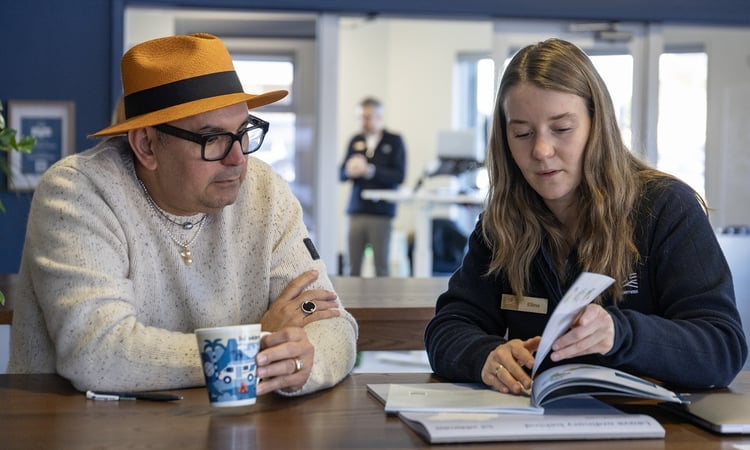
It’s always a good idea to check through any documentation that’s available, in particular the motorhome’s service and repair history. In particular, the vehicle's service record. A dealer-supplied vehicle should certainly have an up-to-date WOF/COF. As with any new vehicle, you should clarify the warranty details to make sure you understand what you're getting.
When you buy from Wilderness, our ex-rental motorhomes come with their full service history, giving you complete transparency on your vehicle’s journey.
- Organise a vehicle inspection
Having decided that everything checks out so far, it’s time to organise a vehicle inspection, preferably from an independent organisation. After that, assuming the inspection report is satisfactory, it’s negotiation time.
- Study the contract
Sales and purchase agreements are standard items used in the automotive world. However, before signing anything, check that the following is correct: agreed price, buyer and seller details, vehicle details (i.e., odometer reading, Vehicle Identification Number (VIN), chassis number, and WOF/COF expiry), any accessories to be included, financial details, and trade-in information if applicable.
Ownership transfer is the responsibility of you, the buyer, and can be done online on the NZTA website or at a Post Shop.
How do you do your Due Diligence for a Private Motorhome Sale?
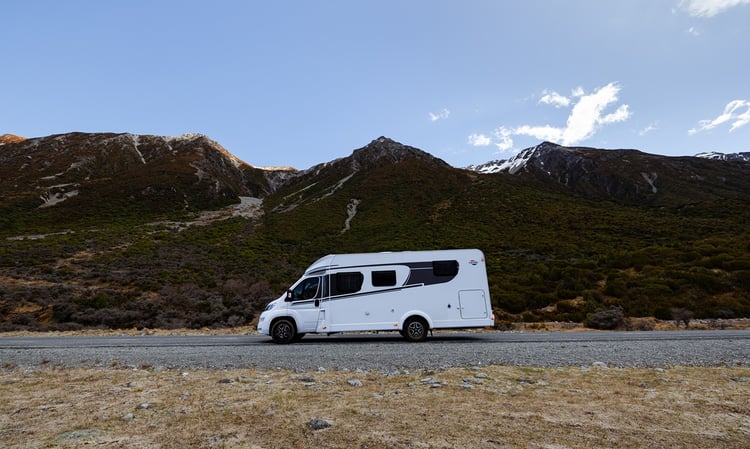
Buying a used motorhome via a private sale is much the same as buying from a dealership. However, there are a few extra things to consider. Make an appointment to view the motorhome and ask the owner to have appliances like the fridge and central heating (if fitted) turned on and operating. Both take a while to get to their respective operating temperatures, but anything else, like the gas hobs, water pump, and air conditioner, can be checked when turned on.

