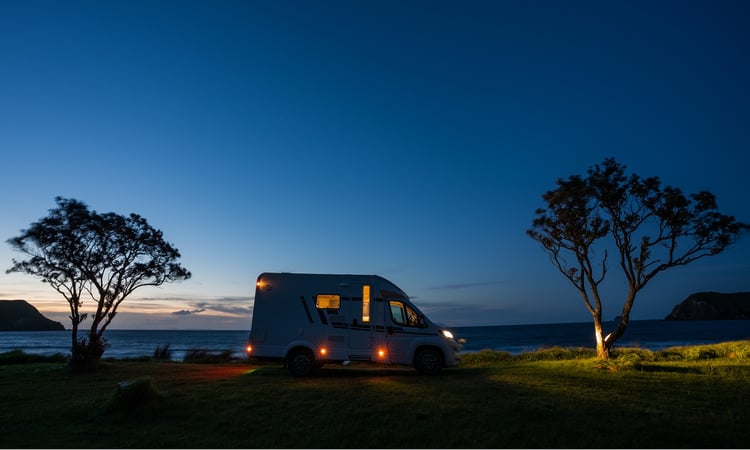
Do you want to park up somewhere stunning that’s far from the crowd? You’ll need an onboard power supply system that will allow you to camp independently wherever you like, for as long as you want.
The problem is that most new motorhomes don't come with enough built-in power for more than a few days of off-grid camping. That's why many motorhome owners choose to upgrade their power setup after buying.
A reliable off-grid power supply keeps the essentials running – things like your fridge, coffee machine, or a CPAP machine, if you use one to sleep. It can also be converted into standard 240V power for running regular appliances and charging your e-bike batteries.
Written by Paul Owen - a motorhome expert, off-grid traveller, and author of five books on motoring - this in-depth guide will help you set your motorhome up for expanded periods of off-grid touring.
Owen will be looking at concrete numbers to identify how much power you use, how much you need, and how to design a setup that meets all of your needs. He'll also offer expert tips and up-to-date information on the latest technology, and how to keep it running reliably.
How much energy does my motorhome consume in 24 hours?
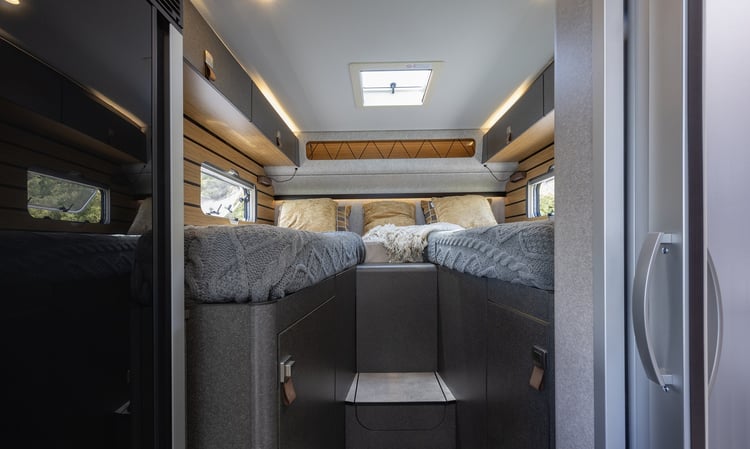
The first step is figuring out how much 12V power your motorhome gets through in a typical 24-hour period. Knowing how much each of your appliances and devices draws from the battery helps you plan accurately and avoid spending more than you need on your setup.
The easiest way to work this out is to check the manuals that came with your motorhome. If you can't find those, most appliances have a small information panel on the back that lists their power consumption.
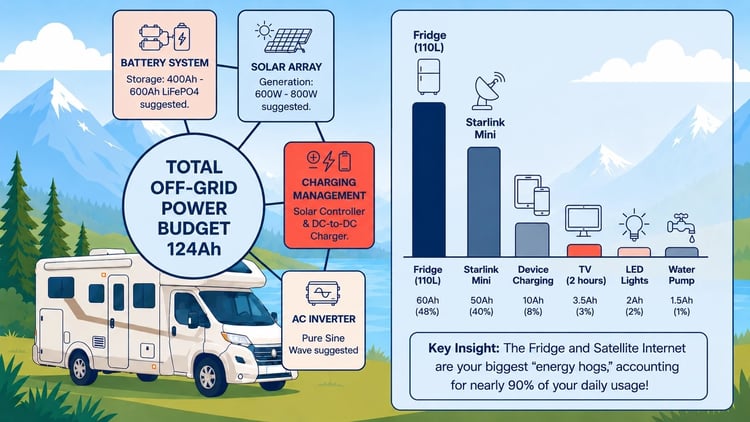
Here's a rough idea of what the total daily power use looks like for an average-sized motorhome with a fully-equipped kitchen:
Fridge
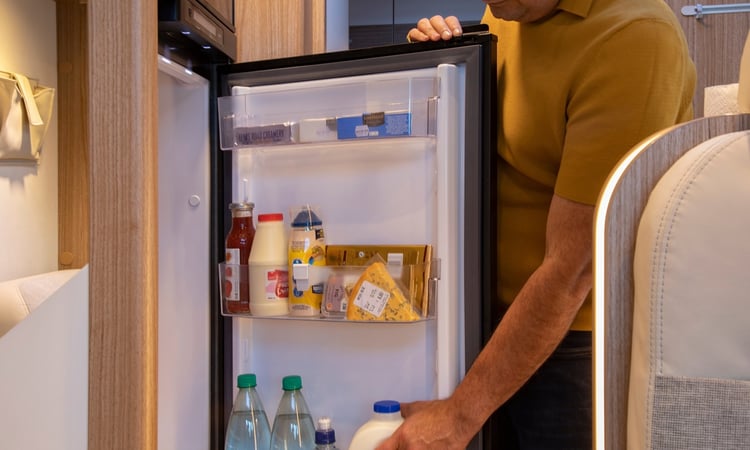
When running on 12v current from the domestic batteries, a modest 110L fridge will draw around six amps per hour when first starting up, before settling down to 2.5 amps per hour when at the chosen cooling temperature.
Keeping the fridge door closed as much as possible and full of food is a strategic way of keeping the energy consumption below 60Ah per day.
Lighting
Most motorhomes are fitted with LED lights these days, and they’re a godsend when it comes to conserving battery storage.
Each LED array will draw between 0.1 and 0.4 amps of current every hour, and the combined LED lights of the average motorhome cabin will draw roughly 2 amps over 24 hours.
TV
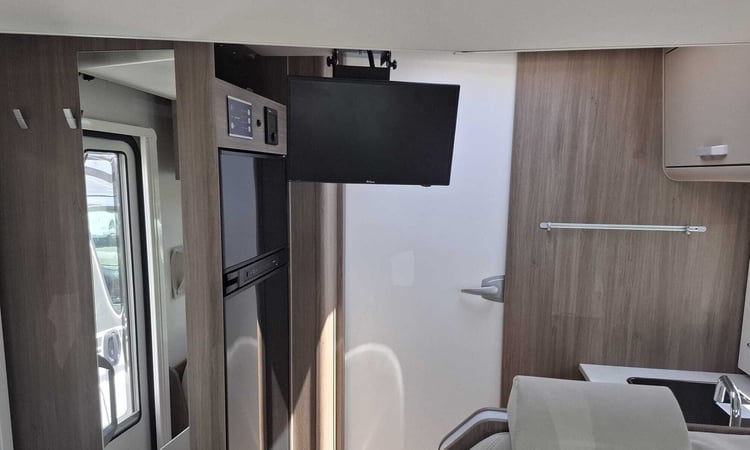
A modestly-sized TV only uses an average of 1.7 amps per hour. If you watch an hour of news followed by an hour of entertainment each evening, that’s a draw of 3.5 amps per day.
Water pump
The good news is that the pump will run only for around 15 minutes per day in total. The bad news is that it’s quite hungry for current, consuming around 5.2 amps per hour. So, expect the pump to draw around 1.5 amps per day.
Connectivity
The Starlink Mini is one of the best options for satellite internet on the road, and it works well running off a 12V power supply. When you first switch it on, it pulls around 5.0 amps, but once it's up and running, that drops to a much more modest 1.5–2.0 amps. If you're using it all day and night, expect it to use somewhere between 40–60Ah over 24 hours.
Device charging
A smartphone or a camera will draw around 2.6 amps per hour to fully charge. Fully recharging a tablet computer or laptop will draw 11.6Ah.
The total draw
Now let's add it all up.
|
Appliance |
Current draw |
Daily usage |
Daily consumption |
|
Fridge |
2.5 A/hr (running) |
Continuous |
50–60 Ah |
|
Starlink Mini |
1.5–2.0 A/hr (running) |
All day |
40–60 Ah |
|
TV |
1.7 A/hr |
2 hrs |
3.5 Ah |
|
Lighting |
0.1–0.4 A/hr per light |
Continuous |
2 Ah |
|
Water pump |
5.2 A/hr |
~15 mins |
1.5 Ah |
|
Device charging |
2.6 A/hr |
Per device |
10 Ah |
|
Total |
|
|
124–137 Ah/day |
In total, you're looking at a total of around 124 –137Ah per day.
If your motorhome only has a pair of standard 100Ah AGM batteries, that setup would struggle to keep up with that kind of daily demand. That's where upgrading your solar panels and switching to more efficient batteries can make a real difference.
Why is Lithium-Iron-Phosphate (LiFePO4) better for off-grid travel?
LiFePO4 batteries – not to be confused with the more flammable Lithium-ion batteries powering your phone – are an excellent upgrade to make to your 12V power storage. Compared to the AGM batteries that are usually fitted to new motorhomes, LiFePO4 units are safer, last four times longer, are half the weight, and can be discharged to a lower level.
A standard AGM battery can only be safely drained down to 50% before it starts to suffer damage, but a LiFePO4 battery can keep going all the way down to 20% and still stay in good health. They're also generally the same physical size as AGM batteries, so swapping them out is straightforward.
So don’t be put off by the alphabet soup name: it’s just a description of the chemistry inside. Lithium (Li) interacts with Iron (Fe) and Phosphate ions (PO4), and this name is often shortened to its simpler form – LFP.
If you want to know more about lithium batteries in motorhomes, check out our blog.
How do I calculate the right battery bank size for my specific needs?
How much battery storage you need comes down to two things: how much power you use day-to-day, and how long you want to stay off-grid. This is where going back to your energy audit is useful.
If your setup includes things like satellite internet, a CPAP machine, a coffee machine, and e-bike charging, you'll need to think bigger. For heavier power users, it's worth installing at least 600Ah of LiFePO4 storage.
To give you a sense of what these things actually draw: charging an e-bike with a medium 500Wh battery uses around 50Ah, while bikes with larger batteries can pull as much as 90Ah. A 1500W coffee machine needs 100-200A to do its thing. A CPAP machine is actually quite economical by comparison – a single 100Ah LiFePO4 battery can keep a CPAP running with its humidifier for 10-12 hours.
How many watts of solar do I need to stay ahead of battery system discharge?
To work this out, you need to account for Peak Sunshine Hours (PSH) in New Zealand. On a fine summer’s day, there are 5-6 hours of PSH available to charge your motorhome’s batteries. In winter, PSH drops to just 2-3 hours. Your solar panel setup needs to be a resilient trap for energy throughout the year.
Having enough panels to capture 300W-400W of energy is a common baseline, and 600W-800W is recommended for total off-grid independence. This wealth of solar watts can ensure a reliable supply of 12V power, which will keep the batteries charged even during the periods of reduced PSH in winter.
How do solar panels work?
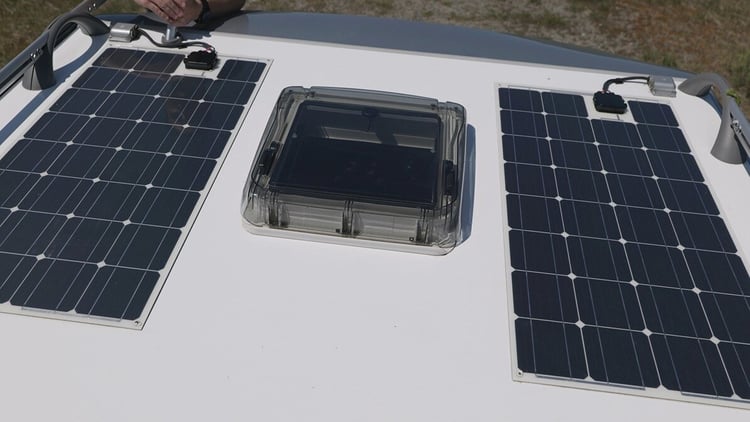
Think of solar panels as your battery storage preservers. Each panel is covered in photovoltaic cells, which convert sunlight into a direct electrical current (DC). That current feeds into your motorhome's 12V battery array, where it builds and maintains the charge, typically kept at around 13.5V.
From there, the power flows out to your 12V sockets and appliances around the cabin. If you need to run standard household appliances, an inverter converts that 12V DC current into 240V AC power, which is what your regular plug sockets use.
One important part of the system is the solar controller. This stops too much current from flooding into the batteries when the sun is strong, and demand inside the motorhome is low, keeping the batteries cool and healthy. It also highlights an important point: your solar panels and your battery storage need to be matched to each other. There's no benefit in adding extra panels if your batteries can't store the extra energy they capture.
What types of panels should I install?
The number of panels you need also depends on which type you choose. There are three options: monocrystalline, polycrystalline, and thin-film. Monocrystalline panels are the best performers, especially on cloudy or overcast days, with an efficiency rating of 22%. Polycrystalline panels come in at 17%, and thin-film at 11%.
Because roof space on a motorhome is limited, it makes sense to get the most efficient panels you can afford – you'll get more power from fewer panels.
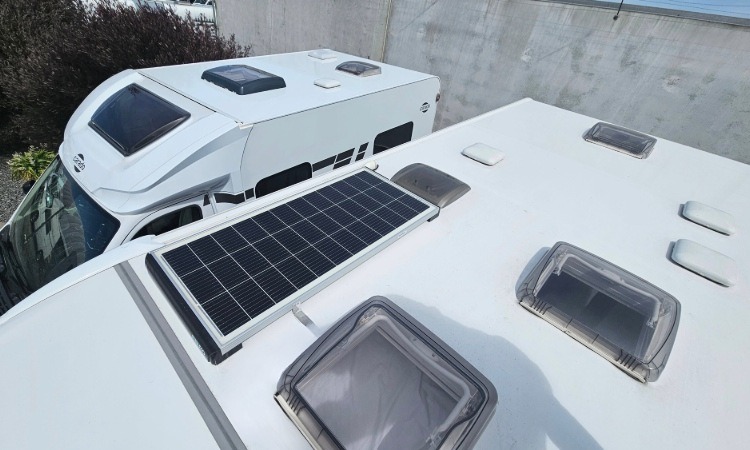
Panels also come in two formats: rigid and flexible. Using a mix of both can help you make the most of every bit of available roof space, squeezing as much solar capture as possible out of the area you have.
To find out more about the benefits of putting solar panels on your motorhome, read our guide.
Can I rely on my engine to charge my house batteries while driving?
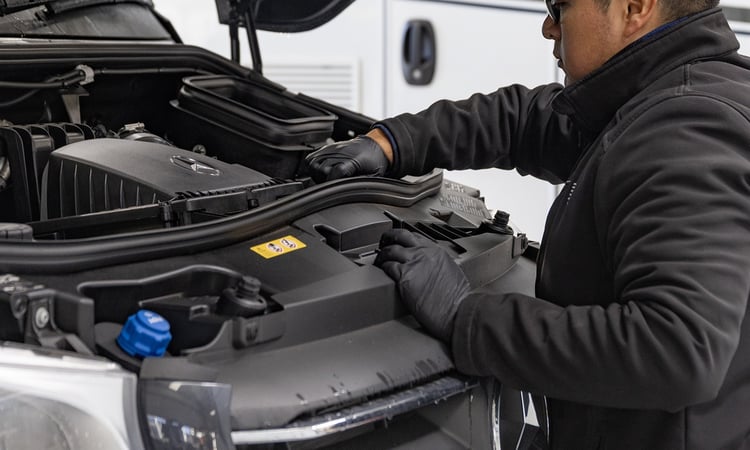
Yes, your vehicle's alternator can charge your domestic batteries while you drive, and it does the job well.
However, if you've switched to LiFePO4 batteries, there's one thing to be aware of. Many modern motorhomes have 'smart' alternators that vary their output to improve engine efficiency, and LiFePO4 batteries need a steady, consistent charge to stay healthy. That means you'll need a DC-to-DC charger sitting between the alternator and the batteries to act as a buffer.
If your motorhome doesn't already have one, it's well worth fitting. DC-to-DC chargers are not only better suited to LFP batteries – they're also faster at charging all types of domestic batteries.
What are the best backup charging methods when the sun fails?
The best backup charging methods, from ideal to last resort, are:
Check into a powered campsite: The ideal solution. Hook up to mains power to bring your batteries back to full charge, and make the most of the other facilities while you're there – laundry, greywater disposal, and a freshwater top-up all in one stop.
Take the motorhome for a drive: A few hours on the road should be enough to get the batteries well charged via the alternator. And who knows, the sun might be shining at your destination, which would be a real bonus for your solar panels.
Keep a portable battery pack on board: A larger portable battery is a cheaper and more practical backup than a generator. It won't run everything – you may need to go without the coffee machine, TV, and satellite – but it'll cover lighting, boiling water for hot drinks, keeping your devices charged, and possibly even the CPAP machine.
Use a petrol generator: If the batteries give out late on a stormy night, a petrol generator (avoid diesel – it’s noisy, messy to handle, and the smell of the exhaust is very unpleasant!) with the right cable to connect to your motorhome can keep things running for a few hours at a time. It's not the most convenient option, but it gets the job done.
How do I run Starlink 24/7 without killing my battery bank?
Starlink internet connectivity consumes lots of battery power, but there are ways to manage the system’s appetite for electrons.
-
Use a dedicated 12V–56V DC conversion kit: This connects Starlink directly to your 12V supply, bypassing the inverter and avoiding the inefficient process of converting DC to AC and back to DC again.
-
Enable rest mode: When you're not actively browsing, rest mode reduces the draw on your batteries significantly.
How can I guarantee 100% reliability for my CPAP machine overnight?
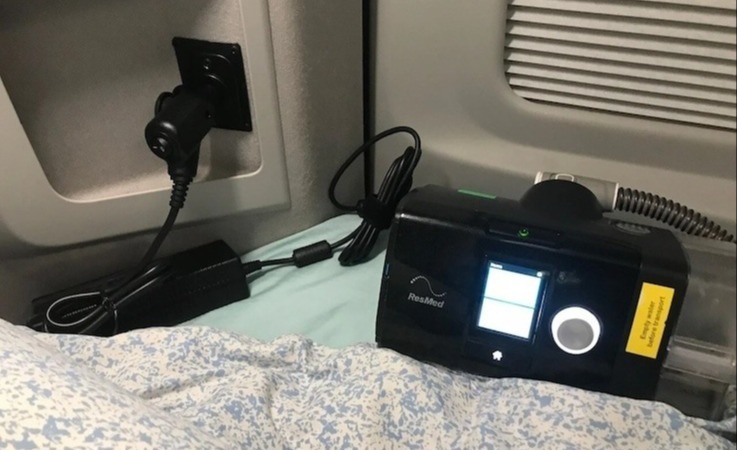
The most efficient way to run a CPAP in a motorhome is to power it using a DC cable directly from your 12V supply. This bypasses the inverter, which means less energy is wasted in the process.
For extra peace of mind, it's also worth having a dedicated portable power station just for your CPAP. An 858Wh power station is actually cheaper than many of the small backup batteries sold by CPAP manufacturers. It’s also far more capable, keeping the machine running for three full nights rather than just a few hours.
What size inverter do I need for high-wattage appliances?
Think of the inverter as the hard-working essential link between your RV’s 12V and 240V systems. You can work out which size you need by determining your energy consumption and accounting for surge wattage.
Step 1: Choose the right type
There are three types of inverters: Square Wave, Modified Sine Wave, and Pure Sine Wave.
Forget the first two: the Pure Sine Wave inverter is a relatively new development, and it’s electronic, silent, and more efficient. It’s the only inverter type that should be used in RVs.
Step 2: Work out how much power you need
Go back to your energy audit, and think through all the appliances you might want to run at the same time off-grid. E-bikes to charge? A CPAP machine? Coffee while the TV is on?
That last scenario is a useful one, because it highlights an important distinction: the surge wattage an appliance draws when it first switches on, versus the lower steady-state wattage it needs once it's up and running.
Step 3: Account for surge wattage
Take the coffee-and-TV example. In steady use, a TV draws around 50w and a coffee machine around 1000w – a combined 1050w that a 1200w inverter handles easily. But when both appliances start up at the same time, their combined surge can exceed 1200w. Most inverters have a built-in 10-second overload capacity to handle this, but if that window is exceeded the inverter will overheat and shut itself down.
The simplest fix is to make the coffee first, then turn the TV on. Alternatively, buy an inverter with a higher output rating – just make sure your battery capacity is large enough to make full use of it.
Here's a table of common appliances and their power requirements. As a rule of thumb, surge wattage on startup is typically double the steady-state figure.
|
240v Appliance |
Continuous Power Rating |
Surge Power Rating |
|
900W Microwave oven |
1500W |
3000W |
|
1200W Hair Dryer |
2500W |
5000W |
|
1500W Induction Hob |
2500W |
5000W |
|
1200W Coffee Machine |
2500W |
5000W |
|
100W 20” LCD TV |
300W |
600W |
|
50W Laptop computer |
300W |
600W |
|
1200W Toaster |
1500W |
3000W |
|
350W Blender |
1000W |
2000W |
|
5W mobile phone charger |
300W |
600W |
How do I avoid an inverter shutdown?
Running high-wattage appliances puts a lot of strain on your batteries, and if the voltage drops too low the inverter will automatically shut itself down to prevent permanent battery damage. Most inverters trigger this cutoff at between 10 and 11 volts. Some models let you adjust this threshold to a slightly higher level, which gives your batteries a bit more protection.
The best way to avoid hitting that cutoff in the first place is to make sure you have plenty of battery capacity to support your inverter. There's a simple formula for working out the minimum you need:
Divide your inverter's maximum wattage output by five
So for a 1400w inverter, you'd need at least 280Ah of battery capacity. Here's how that looks across common inverter sizes:
-
1000w → 200Ah
-
1400w → 280Ah
-
2000w → 400Ah
-
3000w → 600Ah
-
4000w → 800Ah
Use this as your baseline when designing your system, and you'll have a setup that's reliable, long-lasting, and capable of powering your adventures for years to come.
Want to know more about motorhome inverters and how they work? Check out our guide.
How do I monitor my 12V system to prevent ‘discharge anxiety’?
A smart battery monitor is one of the most useful things you can add to your setup. Fitting a Bluetooth-enabled 'Smart Shunt' to the negative battery lead gives you precise, real-time information about your battery voltage and state of charge – all readable from your phone.
It's also a great way to get a clear picture of what your appliances actually consume. Once it's installed, simply switch appliances on and off one at a time to see exactly how much power each one draws, both at startup and during normal use.
This kind of monitor is especially important if you've switched to LiFePO4 batteries, as they aren't compatible with basic voltage meters. A Bluetooth-enabled system like the Victron BMV-712 Smart tracks every amp flowing in and out of your battery bank, and stores historical data so you can spot patterns and fine-tune your setup over time.
What fuses, breakers, and wire gauges are non-negotiable for safety?
Here are standards that must be followed when designing a 12V domestic power system:
-
A main battery fuse (ideally a Class T fuse for LFP batteries) must be located within 200mm of the battery terminal.
-
Every major load and charger connection (not just the battery) should have its own appropriately rated fuse or breaker on the positive wire, as close to the power source as practical.
-
Wires must be sized for ampacity and ‘Voltage Drop’. For a 2000W inverter, a minimum of 70sq. mm (2/0 AWG) is typically required.
-
All 240V outlets powered by an inverter must be RCD-protected.
-
Any 240V AC work in New Zealand must be done by a registered electrician.
How do I troubleshoot the most common off-grid power failures?
Some of the most common failures with off-grid systems are:
Solar panels not charging the batteries when the sun is shining
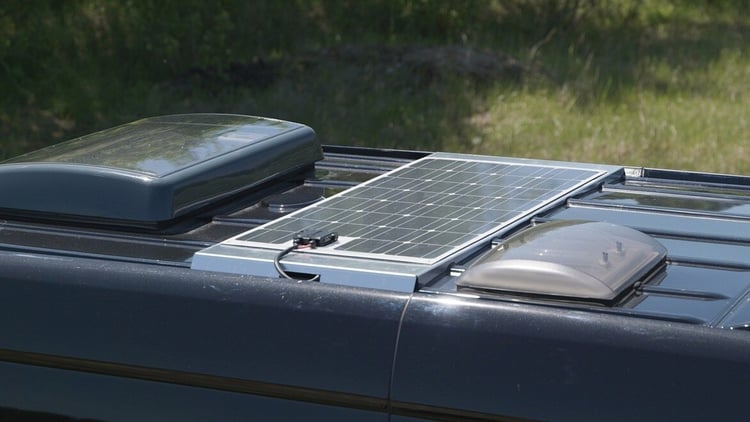
Start by checking your digital battery monitor for the current state of charge and any fault codes – charging may have been automatically disabled until the fault is resolved.
If there are no fault codes, other common causes include:
-
Extreme temperatures (below 0°C or above 45°C)
-
Shading on the panels, or a low sun angle
-
A buildup of dust on the panel surface
Battery bank appears full of charge but power supply is intermittent
If the battery monitor is showing a healthy 12.7-13.5 volts for the batteries, the problem is likely to be caused by a poor connection somewhere in the system, such as a loose or corroded battery terminal.
If there is no power being supplied, check to see if the battery disconnect switch has been accidentally activated, and that no circuit breakers have triggered.
DC-to-DC charger not working while driving
Run through these checks one at a time to find the fault:
-
Check the inline fuse: Find the fuse on the wire connecting the charger to the battery and check if it has blown. If so, replace it with one of the same amperage rating.
-
Check the circuit breaker: If it has tripped, reset it and see if the charger starts working again.
-
Check the ignition wire: This is the wire that tells the charger the engine is running. Make sure it's firmly connected at both ends.
-
Check your wiring gauge: If the wires running to the charger are too thin for the current they're carrying, voltage drops and the charger can't function properly. If in doubt, have an auto electrician check this for you.
Inverter dropping output under load
Inverters pull massive amounts of 12V DC power to create 240V AC. If your house batteries are weak, have a dead cell, or are deeply discharged, the voltage will plummet under load.
A fully charged 12V battery should rest at 12.6V to 12.7V. If it drops below 11.5V to 11.6V when a load is applied, your batteries are either dead, damaged, or cannot handle the current draw. It’s time to consider replacing them.
Wiring getting warm
This is a sign that the 12V system is dangerously overloaded and is a clear warning that the system may cause a fire – don't ignore it. Switch off your appliances immediately and don't use the system again until the cause has been identified and fixed by a qualified auto electrician.
Common causes include running too many appliances at once or loose and corroded connections.
Want to know more about full-time motorhome living? Read our blog.