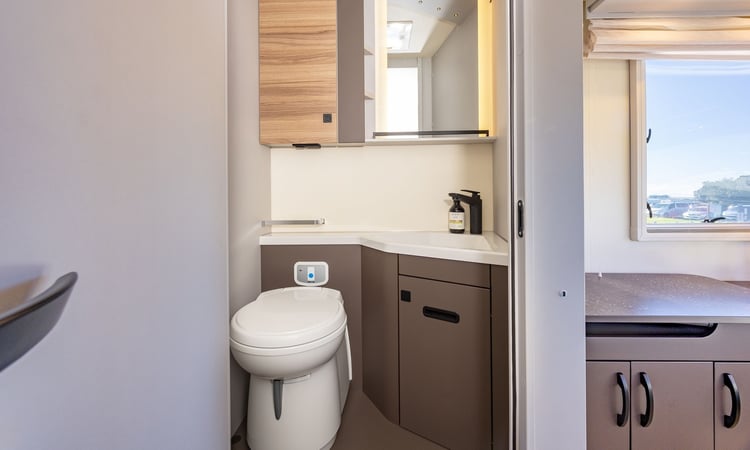
It is a question motorhome buyers are sometimes too polite to ask on the showroom floor: which toilet setup is the easiest to use? Which smells the least?
A motorhome’s toilet system shapes how far off-grid you can go, how often you have to empty it out, and whether the vehicle stays fresh and hygienic through a long stretch of travel.
This guide breaks down the two toilet systems you will realistically choose between in a New Zealand motorhome – a cassette toilet and a composting toilet. We’ll go over the pros and cons of each, and how they fit New Zealand's self-containment rules. We’ll also explain why we have landed on the cassette toilet as the best all-round solution for travelling in comfort.
What are the main types of toilets you can have in a motorhome?
In New Zealand, you will realistically choose between a cassette toilet and a composting toilet. A third, the blackwater holding tank, is common overseas but not a practical option here.
All are permanently fixed toilets, which is a legal requirement for self-containment in New Zealand. What differs is how the waste is stored and how you get rid of it.
Cassette toilet
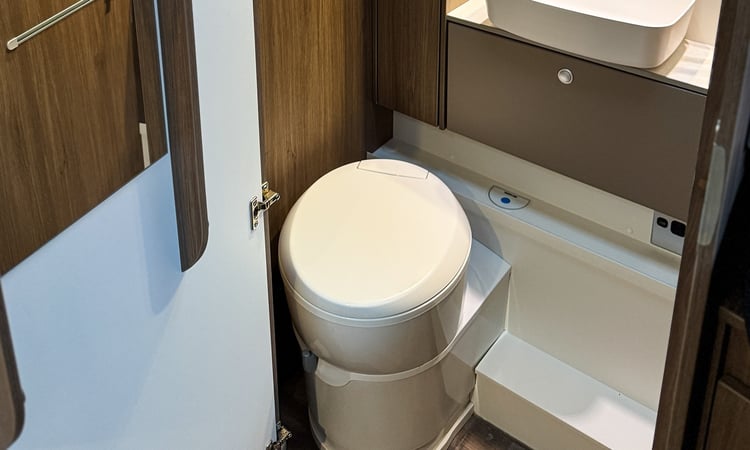
This is the most common type of toilet used in campers and motorhomes in New Zealand. It is plumbed and mounted in place, and it flushes like a household toilet.
-
Capacity: Around 17 to 20 litres, depending on the model.
-
Access: Through an external hatch in the side of the vehicle. You slide the cassette out and carry it to a dump point.
-
Emptying frequency: Couples typically need to dispose of waste once every 2-3 days, depending on use.
-
Smell factor: Toilet chemical is added to the cassette, which neutralises the smells.
-
Who it suits: Owners who want a low-maintenance, flushing toilet that’s similar to what they have at home.
Composting (waterless) toilet
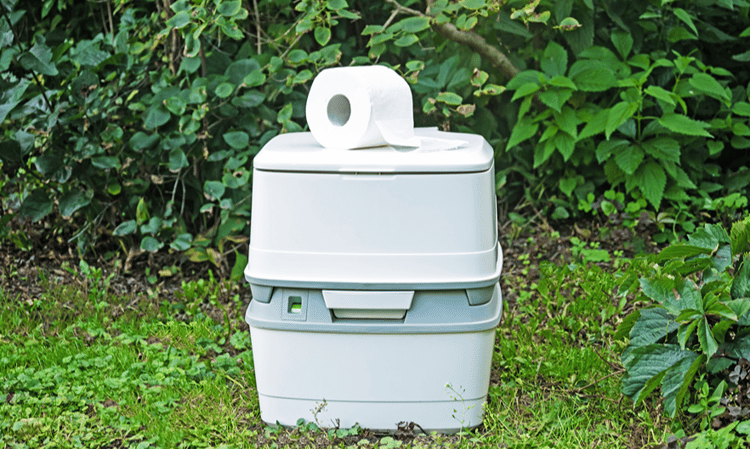
A composting toilet is becoming more popular among some motorhomers. It uses no water and no chemicals. Urine goes into a bottle at the front, while solids drop into a separate chamber, usually mixed with a dry carbon material such as coco coir or sawdust, and kept dry by a small 12V extractor fan and vent.
-
Capacity: Around 15 to 22 litres in total.
-
Access: You access the solids bag and urine bottle by lifting the toilet bowl itself.
-
Emptying frequency: You'll need to empty the urine bottle every few days. Solids need emptying less frequently – every few weeks, or sometimes, even months.
-
Smell factor: After each use, you add dry carbon material to cover the solids and control odour. Composting toilet users describe the smell as “earthy” rather than unpleasant. Mixing liquids and solids is the reason for the famous sewage smell, so keeping them separate and dry goes a long way to minimising it.
-
Who it suits: Owners who want to travel off-grid with minimal reliance on dump stations and are comfortable with a more hands-on approach to waste.
Blackwater holding tank
You might hear about these from overseas, mainly in large American RVs. Waste drains into a big fixed underfloor tank that stays on the vehicle and drains out through a hose where you park, rather than being carried to the dump point like a cassette.
They rely on drive-over dump points that New Zealand's network does not have, so they are not a practical option here. That is why the rest of this guide sticks to the two systems that work here: cassette and composting.
Interested in everything to do with motorhome bathrooms? Check out our complete guide.
How do you empty and maintain each system while travelling?
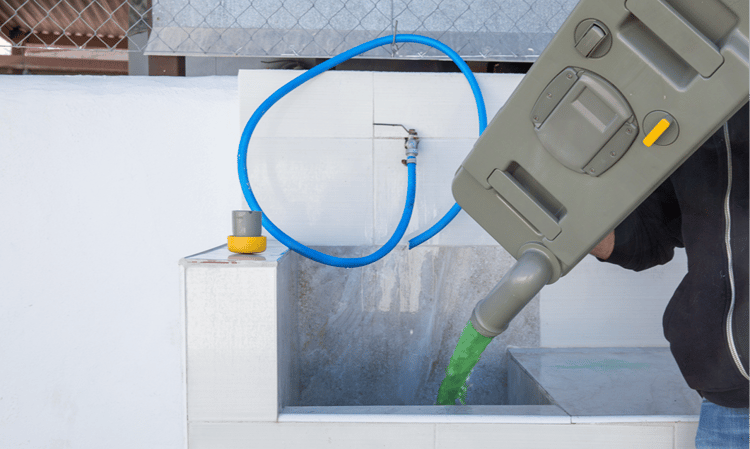
You empty a cassette by carrying its tank to a dump station, and a composting toilet by lifting out its solids bin and emptying the liquid bottle separately. Both need some routine cleaning and odour control on top of that. Here's each in turn.
How do you empty a cassette toilet?
Open the external hatch, unclip the cassette and slide it out. Most have wheels and a pull-up handle, so you can wheel it to the dump point like a small suitcase rather than carry it. Empty it through the pour-out spout, give it a rinse, add fresh toilet chemical, and slide it back in. The whole job takes a few minutes.
For a visual rundown, check out our reel!
How do you empty a composting toilet?
To empty the solids, follow these steps:
-
Unlatch the clips on the sides and slide out the front drawer to reach the solids bin.
-
Lift the bin out.
-
Tip the contents into a compostable bag (Goodloos suggests a 15 to 20 litre bag), or empty it straight into a compost setup.
-
Drop some fresh coco coir briquette in, and the toilet is ready again.
The solids bin holds roughly 25 to 30 uses, so for a couple, it lasts a couple of weeks or more before this job comes around. The urine bottle at the front is the frequent task, emptied every day or two into a public toilet.

You can get rid of double-bagged solids in municipal rubbish, either at a waste station or at home – not in public bins. It can also go into a Secondary Treatment System (STS) that you set up at home, or it can be buried on your own land. It’s a dry, soily material, so it’s not unpleasant to deal with. If you have a lifestyle block, you can bury it appropriately at the right depth.
Both systems also need a little maintenance outside of the regular emptying. Here’s how each setup works.
Keeping a cassette going
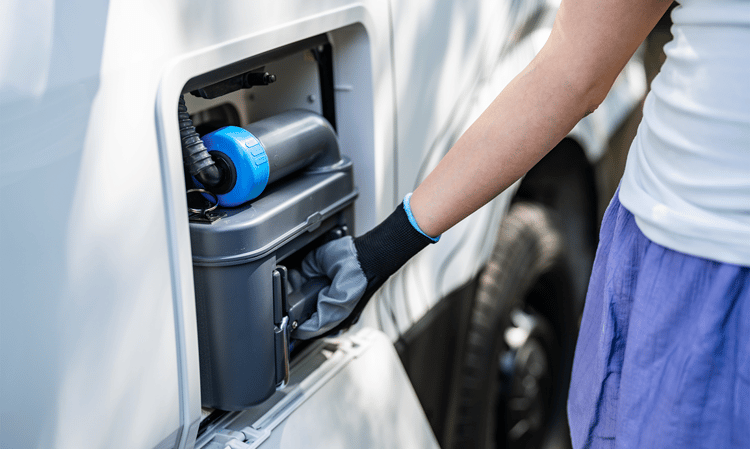
-
A few times a season, run a tank cleaner through and give the seals a spray of lubricant so the blade valve stays smooth and leak-free.
-
Every four to six years, the lip seal is a cheap replacement.
These are quick, well-understood jobs, and because the cassette is the New Zealand default, the additives and parts are on the shelf at any camping store.
Keeping a composting toilet going
-
Top up the carbon medium (typically coco coir) as you use it, and empty and clean out the solids chamber when it fills.
-
Keep the 12V extractor fan running and the vent clear at all times. A irflow is what keeps the solids dry and odour-free, so a stalled fan or blocked vent quickly becomes a smell problem.
-
The fan itself is largely hands-off (it draws barely any power and runs continuously), but it is a wear part. Expect to clean dust off it occasionally and replace it once in a while.
What New Zealand's self-containment rules mean for toilet systems
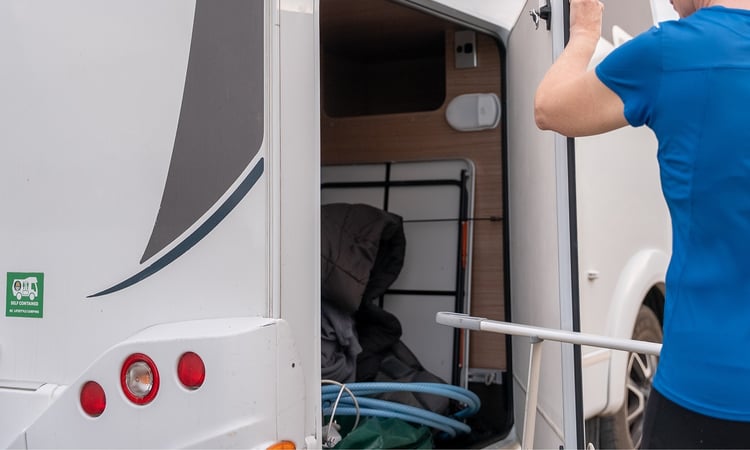
New Zealand's self-containment rules changed in 2025, and they are backed by law and administered by the Plumbers, Gasfitters and Drainlayers Board (PGDB). The old blue warrant is no longer accepted: to freedom camp where self-containment is required, your vehicle needs the green warrant.
The toilet rule is the big change
A portable toilet no longer qualifies. The toilet must be permanently fixed to the vehicle and usable inside it.
-
A cassette or composting toilet that is plumbed or mounted in place qualifies.
-
A toilet you lift in and out of a locker does not.
Where composting toilets stand
Composting toilets can be certified, but the rules changed how they must be installed. The standard now requires the toilet to be permanently fixed, which means the solids bin has to be emptied without removing the base: you can no longer lift the whole unit out to empty it. The base stays fixed, and the waste is removed from within it.
If you freedom camp without the correct toilet setup, fines can reach $400 or higher.
Want to know more about Certified Self Containment (CSC)? Read our full blog on the rules and changes.
How do New Zealand dump stations handle cassette and composting waste?
-1.png?width=750&height=450&name=Dump%20station%20sign%20(1)-1.png)
A cassette empties at any dump station in the country, while composting solids cannot go into a dump station at all. Here is how it works.
The New Zealand dump station network
Dump stations are located at holiday parks, council sites, service stations, public toilet blocks and i-SITE visitor centres, and are easy to find through the CamperMate and NZMCA apps.
A dump station takes both toilet (black) waste from cassette toilets and grey (sink) water, typically through separate points: an inlet for toilet waste and a grate or drain for grey water. Tipping either anywhere else is illegal.
The network is dense for a country this size, but coverage thins out in remote areas. On routes through places like the West Coast or Fiordland, the next dump point can be a long drive away.
Why dump stations don't work for composting toilets
Composting solids do not go into standard New Zealand dump stations, which are designed for liquid, sewer-bound waste. According to composting-toilet distributor Goodloos, the practical approach is to double-bag the dried solids in biodegradable bags and put them in your household rubbish, rather than in a public street bin. The material comes out dry and granular, not raw waste.
It can be weeks, or even months, before you need to empty out solids in a composting toilet. That means you can go a whole trip without needing to dump waste, and can dispose of it safely once you’re home. If you do need to dispose of waste on the road, a municipal waste station is your best bet.
Cassette toilets: the practical pros and cons for long-term New Zealand touring
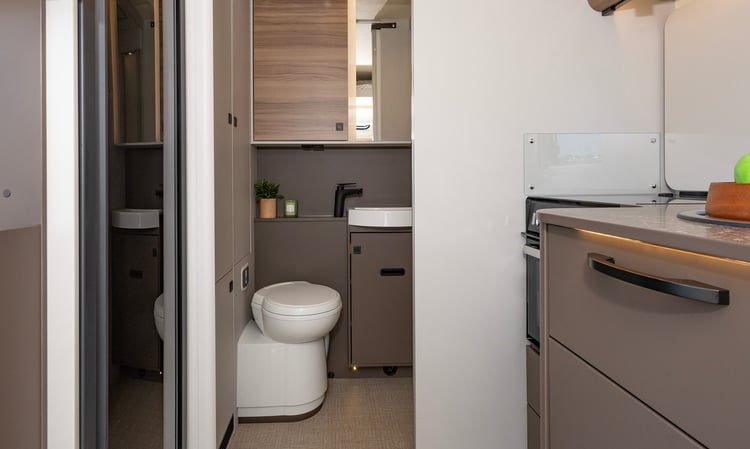
The cassette's strength is flexibility and familiarity; its cost is emptying every few days and handling the cassette yourself. In practice, the pros outweigh the cons for most New Zealand travel, which is why it is the default here.
Pros
-
Universal dump access. You can empty it at any dump station in New Zealand’s extensive network.
-
Familiar flush-and-walk-away use.
-
Sealed and low-odour when used with the correct chemical.
-
Purchasing a spare cassette extends your off-grid range if you plan to freedom camp away from facilities for an extended period.
-
Dump stations accept both toilet and sink waste, so you can deal with your black and grey water at the same time.
-
The New Zealand default, so parts, servicing and support are everywhere. The cassette toilet is the most popular motorhome toilet in New Zealand, and Thetford and Dometic are the two major brands.
I find the cassette no problem at all; I get into the habit of using public toilets when easy to do so, which reduces the frequency of having to empty the cassette.
Cons
-
Emptying every few days rather than every few weeks.
-
You handle the cassette directly when emptying, and it can be heavy to lift.
-
You need to keep a supply of toilet chemical and top it up after each empty.
For luxury motorhome buyers, the handling that people worry about has been engineered down. Modern Thetford cassettes have a waste tank fitted with a handle and wheels for easy transport, level indicators so you are not caught out, and a comfortable seating design.
Curious what full-time motorhome living is like, including what size cassette you’d need? Read our complete guide.
What are the pros and cons of composting toilets?
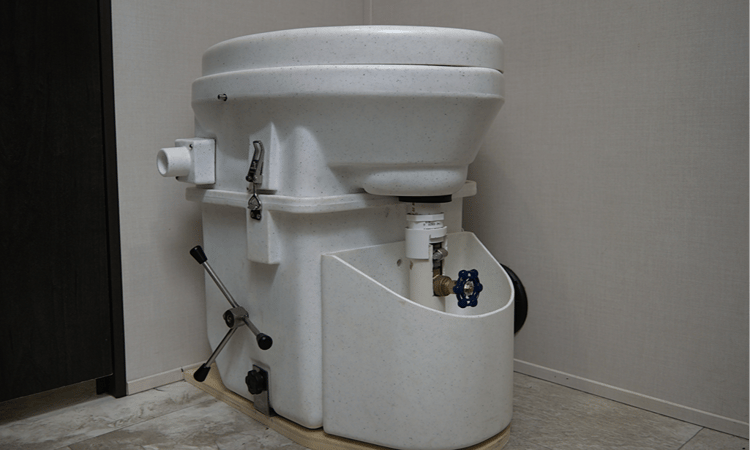
The appeal is water-free, chemical-free operation and long gaps between needing to dispose of solid waste. The drawback is more hands-on handling and, in New Zealand, the problem of disposing of the solids while travelling.
Composting toilets can be green-warrant certified, and a few New Zealand-approved models exist. These are:
-
OGO Nomad: Specifically designed for the campervan market in New Zealand, and the first composting toilet approved for self-containment certification.
-
OGO Origin: Also approved, with more capacity compared to the Nomad.
Our OGO Origin toilet is just the best. Installed in our new caravan it is everything we hoped for, good quality, reliable, easy to use and no smell. We’re confident it will be a real game changer for extended off grid caravan tripping.
Compliance depends on whether or not the toilet has been permanently fixed.
Pros
-
No water use and no chemicals, which suits an off-grid, low-impact philosophy.
-
Far less frequent solids emptying than a cassette – once every few weeks (or even months), rather than once every few days.
-
Cheap to maintain, since you don’t need to buy toilet chemicals.
The solids container in the Origin can technically last for months, if it’s run well. That’s the big difference between the composting and cassette toilet, where you’re always looking for a dump station.
Long-term running costs are low, as you don’t need to keep adding chemicals. You only need the compost medium – we tend to use the Coco Coir Briquette, which you can get in any Bunnings for around $6. That’ll last you for a few months, so it only costs around $2.50 per month to run a composting toilet. A small fan runs gently in the background to keep the solids dry, which is key to the composting process, and it also keeps the smell away.
Cons
-
Solids handling is more hands-on than a cassette, not less. You are dealing with the composting chamber directly.
-
The liquid bottle still needs emptying every few days, and you still need to go to dump stations every couple of days to dispose of greywater.
-
Solids need double-bagging for the rubbish, and the disposal rules are not always clearly spelled out by councils.
-
Higher upfront cost, and not an option on a Wilderness motorhome, which is built around the cassette system.
According to The Design Coach & Body Company, an aftermarket retailer for motorhomes and campervans in Christchurch, composting toilets work best for travellers who have their own lifestyle blocks where they can bury waste. If you don’t own land, disposal can be tricky.
They seem greener for the planet, but the issue is, where do you dispose of the waste when travelling? You can't dump onto land you don't own. You can't put it in public rubbish bins as it's human waste, and you can't empty it down a normal approved dump station, because the bags block the system. Spills inside the motorhome are common, despite all the care in the world.
The verdict – cassette, or compost?
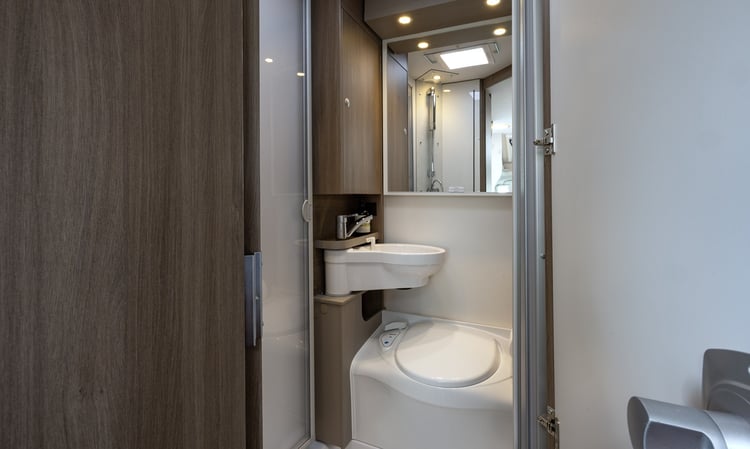
For most people travelling New Zealand in a motorhome, a cassette is the simplest and most widely available option. A composting toilet can work for those who want to spend a little bit less time at dump stations, and preferably own a lifestyle block for easy disposal.
Here’s a simple comparison:
-
Cassette wins on flexibility and predictability. You can empty it at a vast network of dump stations across the country, the process is quick and easy, and there are no council rules to research as you travel.
-
Composting wins on chemical-free operation and ongoing cost, but it costs the most hands-on effort per empty and carries the most uncertainty around disposal.
This is a large part of why premium European motorhomes overwhelmingly ship with refined cassette systems.
Ready to start browsing? Our premium, imported German motorhomes all come with cassette toilets installed. Take a look at the full range now.


