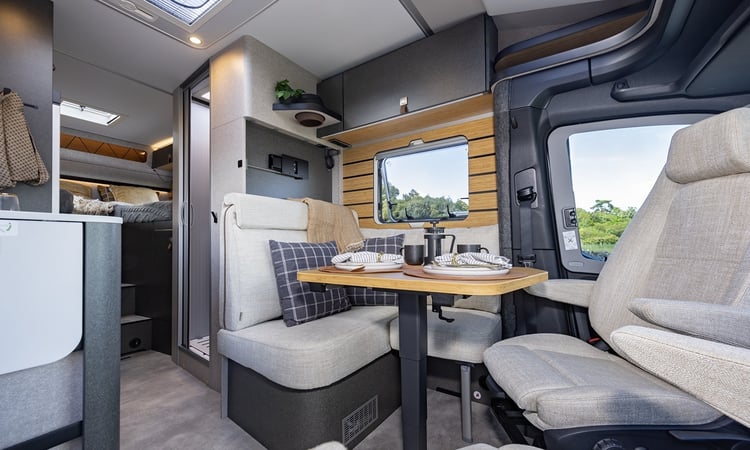
Is buying a brand-new motorhome worth it? While vehicle depreciation never sleeps, the good news is that new motorhomes hold their value far better than new cars. Where a car loses a significant chunk of its value the moment you drive it off the lot, the decline for a new motorhome is much more measured. It’s like comparing the gentle descent of a hot air balloon to the sharp thump of a jumbo jet coming in to land.
Because of this resilience in residual value, the choice is often tipped in favour of splashing out on a brand-new RV instead of a used one. However, whether you are truly better off buying new depends largely on your personal circumstances and the mobile lifestyle you want to adopt.
To help you decide, let’s delve into the advantages of buying new – from comprehensive warranty cover and advanced technology to the latest safety features – as well as the scenarios where opting for a secondhand motorhome might be the smarter choice.
Is buying a brand-new motorhome a better long-term investment than buying used?
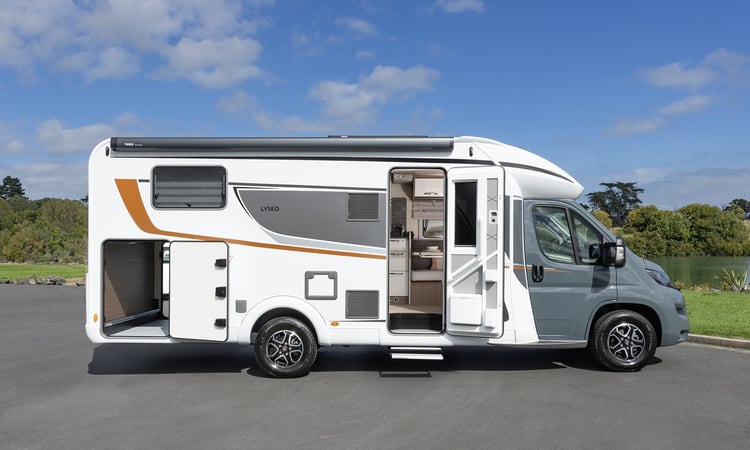
If your priorities include predictability, reliability, and having access to the latest technology, buying a new motorhome is the best option. You get to enjoy the longest warranties, a motorhome in prime condition, and financing options that make buying brand new more achievable than you might think.
Here are the best reasons to become the first owner of a motorhome.
Resale stability
High-quality motorhomes hold their value remarkably well in the used market, as there is strong demand for them. This creates a significantly shallower ‘diminishing value curve’ when compared to new cars. A new car will lose roughly 30 per cent of its value over the first year of ownership. The residual value of a new motorhome will have fallen by just 10 per cent by the end of Year One. The strong retention of residual value of new motorhomes, versus buying a used one, means that the difference in the overall cost of ownership is not as large as you might think.
Improved technology
Motorhomes have taken a ‘great leap forward’ in recent model years and are continuing to improve. A much-expanded suite of driver assistance aids and more efficient powertrains is now available for the vehicle platforms upon which the motorhomes are based.
New technology is also upgrading the habitation areas of RVs. An example is the growing trend for motorhome manufacturers to no longer fit Absorbent Glass Mat batteries in favour of far lighter, more efficient Lithium-Iron-Phosphate (LFP) batteries. Storing energy in LFP batteries increases the payload that the motorhome can carry, and the LFP units also have a service life that is four times longer.
Check out our blog for more information about the different types of motorhome batteries.
If you do decide to buy a new motorhome, make sure you check the specifications carefully. Some importers opt to have desirable equipment deleted to save costs, so buying a new motorhome doesn’t always guarantee access to the latest technology.
No wear and tear
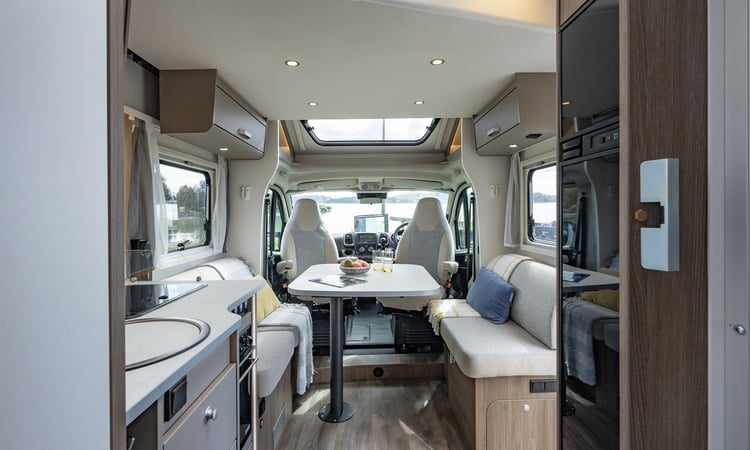
A new motorhome is at the starting point of its service life. Everything is brand new – the appliances, the upholstery, the bedding, the fridge, and the shower and toilet haven’t been used. The mechanical components of the motorhome platform are also hitting the road for the first time. The bearings that keep steering, suspension, and powertrain systems operating smoothly will be spinning for the first time. The oils in the engine, gearbox and drivetrain are fresh and free of contamination. Your new motorhome is ready to go, like an Olympic sprinter entering the starting blocks.
The used alternative won’t be as fit, and will bear the scars, paint chips, stains, and scratches of the time it spent servicing previous owners.
Increased satisfaction of ownership
The ‘warm fuzzies’ felt during the first period of owning a new motorhome are priceless. You’re the first to sleep in the bed, the first to cook a meal in the kitchen, the first to relax in its comfortable cabin. A new motorhome is a blank canvas awaiting your personal touches. It has not already been personalised by a previous owner with different requirements and tastes.
Learn more about how a motorhome buyer became part of the Wilderness team.
What kind of warranty comes with a brand-new motorhome in New Zealand?
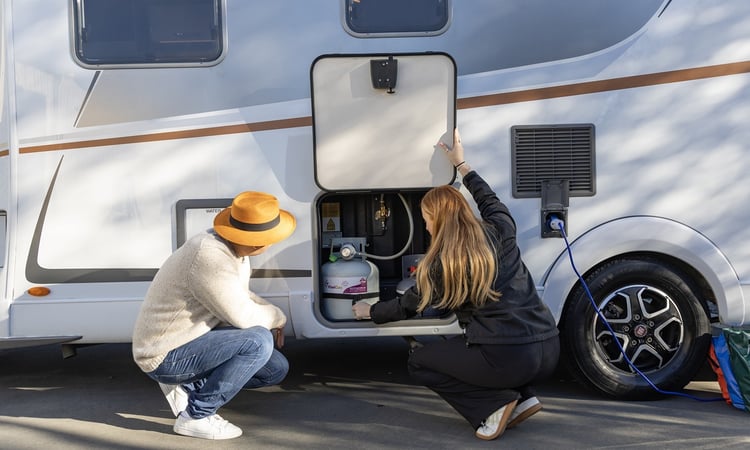
New motorhome warranties cover several main areas: you’ll have one from the automotive company that made the vehicle platform, and two to three from the manufacturer that built a motorhome on top of the platform (habitation, water tightness and sometimes battery), as well as individual warranties for the onboard appliances — think fridge, heater, and other fixtures. They vary a lot in the length of cover they provide, and the conditions that come with them, so check the fine print of the warranties before you buy.
Two-tier protection
New motorhomes use sturdy, reliable light commercial vehicles as their foundations, sourced from well-known motor brands with reputations to protect. The vehicles come from these companies with a warranty that covers all the mechanics and electronics of the platform that formed the starting point for the motorhome. To maintain this warranty cover, a new motorhome owner must have their vehicle serviced at the regular intervals as stipulated by the manufacturer’s schedule.
This will require dropping the motorhome off at an approved dealership or service agent of that automotive brand at a certain number of kilometres travelled or every year, whichever comes first.
On top of this platform warranty, is the warranty from the motorhome manufacturer that covers the habitation unit. It protects new motorhome buyers from any defects or faults found in the build of the motorhome.
The build warranty from the motorhome manufacturer usually provides cover for 2-3 years, so in a lot of cases, it’s just the first owner of the motorhome who will benefit from that important consumer guarantee.
Water ingress guarantees
Water ingress protection continues for a number of years after the build warranty from the motorhome manufacturer runs out. It’s common for new motorhome buyers to be eligible for compensation for repairs for up to five years when water enters the habitation areas of the motorhome, but some premium motorhome brands extend that cover further.
To qualify for water ingress protection, a motorhome owner must show that annual water-tightness checks have been carried out.
The ‘New Zealand-new’ Factor
When you buy a new motorhome from a New Zealand importer, the warranties are backed up by a local dealer network. This ensures that the parts and the skilled technicians required to fit them are readily available, avoiding lengthy delays caused by having to source parts from offshore.
New Zealand-new motorhomes are also more likely to be well-established models rather than more obscure models that have been imported secondhand from other markets. This creates continuity in the parts supply and a wide bank of collective technical knowledge that can be called upon when it’s time to make repairs.
What are the latest technological features I can expect in a new 2026 motorhome?
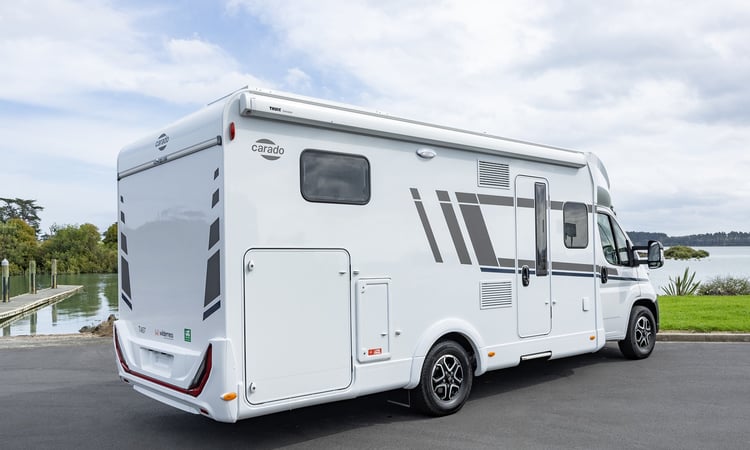
Recent technical progress hasn’t arrived in the motorhome sector upon the wings of gossamer. There’s been an absolute deluge of new gizmos and systems instead that have made the newest motorhomes safer, more refined, more comfortable, easier to drive, and more efficient.
Let’s take a look under the hood and inside the cabin of a state-of-the-art motorhome.
Advanced Driver Assistance Technology
Most of the Advanced Driver Assistance Systems (ADAS) that made cars safer have now trickled through to motorhomes via the light commercial vehicle sector. This means your vehicle can automatically brake to a complete stop if it detects a pedestrian or cyclist you haven't seen.
That same forward-facing radar also provides active cruise control, automatically matching the speed of the vehicle ahead. If you decide to overtake, simply using your indicator can initiate a safe lane change when lane-keeping assist is active.
Visibility has also taken a massive leap forward. It’s no longer just about a basic reversing camera; modern wide-angle cameras now combine to produce a 360-degree overhead "bird’s-eye" view of the entire motorhome and any surrounding hazards.
The list of safety tech continues with blind-spot monitoring, collision warnings, and advanced braking systems that can perform emergency stops in the shortest possible distance without locking the tyres.
Driver monitoring
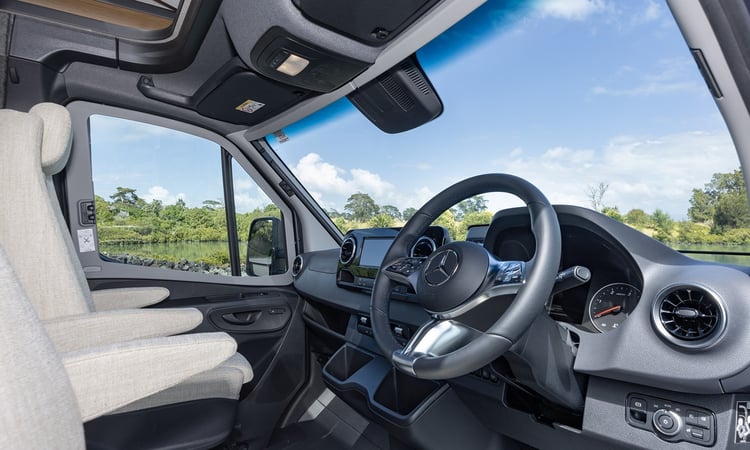
You can no longer fall asleep at the wheel of a well-equipped new motorhome. New vehicles can now monitor the eye movements of the driver to detect drowsiness.
Ditto, there are now Level 2 standards of autonomous driving available, but only if the driver keeps a hand in a relatively high position on the steering wheel. Level 2 autonomy means the motorhome can steer itself when the active cruise control and lane-keeping systems are active, but only in the right conditions, such as motorway driving. When the motorhome detects that there isn’t the required level of contact between the driver’s hand and the rim of the steering wheel, it will sound an alarm and gently hand full control back to the driver.
Upgraded infotainment suites
The latest motorhome models sport wide-screen TVs with smart software that can connect with any onboard wi-fi to upload movies and your favourite channels. The sound systems can audibly recreate an outdoor music festival. Your preferred sports coverage will be just as enjoyable as watching the action in your home.
Better energy management
New motorhomes are becoming increasingly self-sufficient, reducing their environmental footprint through smarter energy management.
Battery storage capacity and solar power arrays are growing larger with each new model year. Managed by more intelligent systems, this increased efficiency has expanded the opportunities for long-term freedom camping. It has also sparked a move toward gas-free motorhomes.
When a vehicle has an abundance of 12v power, there is no longer a need for a traditional gas system. Removing gas from the build eliminates the need for carbon monoxide monitors and regular gas certifications, while also removing the safety compromises associated with carrying gas on board.
Are brand-new motorhomes worth it?
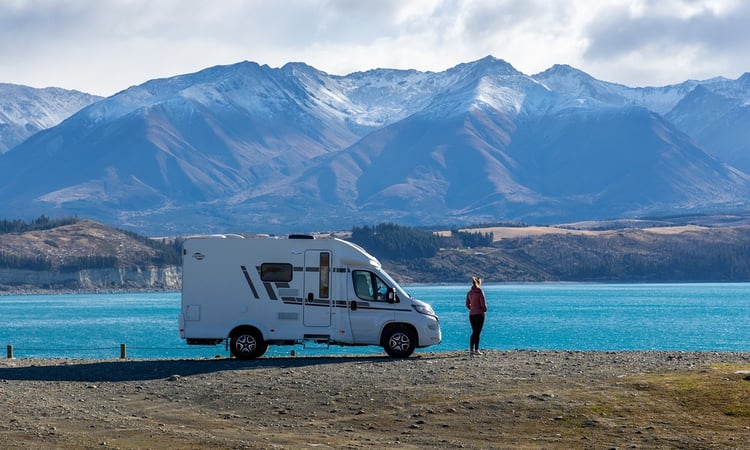
That depends upon how long you plan to keep it. The benefits of being the first owner of a new motorhome multiply the longer you own it. You get to enjoy the protection of the warranty cover and the latest safety and convenience features. If you prioritise safety and reliability, want to leverage the latest tech for extended off-grid stays, and plan to keep the vehicle for five years or more, buying a new motorhome is definitely ‘worth it’.
The 10 per cent reduction in the residual value of the new motorhome over the first year is a one-off. Annual depreciation rates for years 2-5 of ownership will be around 8 per cent. By year 10, your new motorhome should have only lost around 40 per cent of its value.
At the end of your time with it, your new motorhome will enjoy ‘one owner only’ status when it enters the used market. This is a powerful incentive for people to buy it. Many will see it as evidence that the initial owner felt satisfied with it.
When is a new motorhome not ‘worth it’? If you’re a first-time buyer wanting to get a feel for the mobile lifestyle and haven’t yet established your preferences and needs, a pre-loved secondhand motorhome is usually the best choice. This will save you from dropping a larger investment on something that doesn’t turn out to be suitable. The experience you gain by buying a secondhand motorhome will enable you to realise your expectations and requirements. This is valuable knowledge to have when seeking a new motorhome that is a ‘keeper’ later.
Still mulling over your next purchase? Check out our blog on 10 common mistakes to avoid when buying a motorhome.