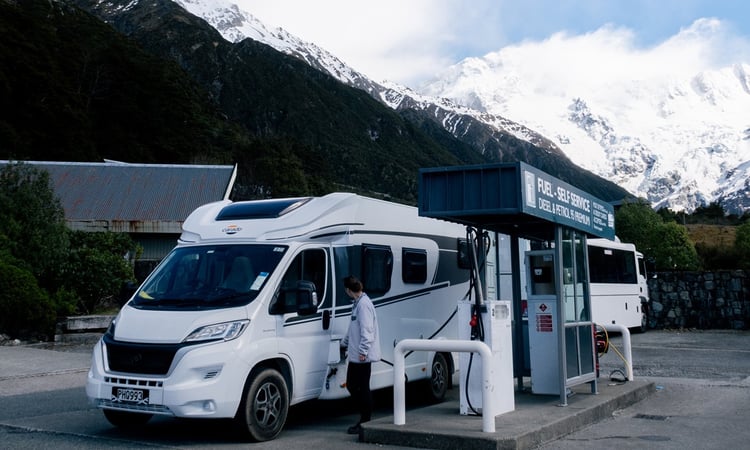
Fuel pump prices are a hot topic at the moment, and for Kiwi motorhome owners planning their next getaway, keeping travel costs predictable is top of mind. When you own your own rig, you want the freedom to hit the road spontaneously without worrying about what the trip is going to cost you in fuel.
This guide looks at how to keep your touring cost-effective, given the current fuel climate. The good news is that hitting the road still makes great financial sense – but a few smart adjustments can make a big difference.
We'll look at how different vehicle designs stack up on fuel economy, what those numbers mean for your wallet on a typical trip, and the practical habits savvy motorhomers can use to keep their running costs down.
Are motorhomes fuel-efficient for travelling around New Zealand?
The short answer is yes, but balancing the road trip budget looks a bit different than it used to. The vast majority of Kiwi motorhomes – including all of those sold at Wilderness – run on diesel, so keeping an eye on the diesel market is key to planning your trip expenses.
For decades, diesel vehicles enjoyed a comfortable price advantage in New Zealand. That changed in early 2026, when disruption to shipping through the Strait of Hormuz sent global fuel prices soaring. Diesel was hit hardest, and for the first time in memory, it climbed above petrol at many New Zealand pumps.
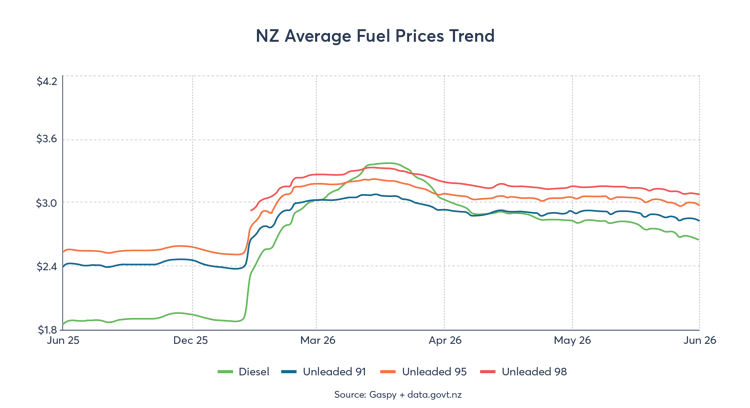
The situation is continuing to ease at the time of writing. Oil prices have fallen from their peak, and pump prices are gradually following.
That said, there's one other cost to factor in: Road User Charges (RUCs). Diesel vehicles in New Zealand pay for road use by the kilometre rather than at the pump, and this adds $76–82 per 1,000km regardless of what fuel is doing on any given day. Add it all together, and total diesel running costs currently sit close to what you'd pay running a petrol vehicle.
So is road tripping in your motorhome still viable? Absolutely – but the motorhome owners who get the most value out of one focus on three things:
-
Vehicle efficiency: Buying a modern, aerodynamic motorhome rather than an older, thirstier model.
-
Slow and light travel: Driving fewer kilometres and carrying less weight.
-
Good driving habits: Steady speeds, no sharp braking or starting, and smart route planning.
How does a premium motorhome's fuel economy protect your investment over time?
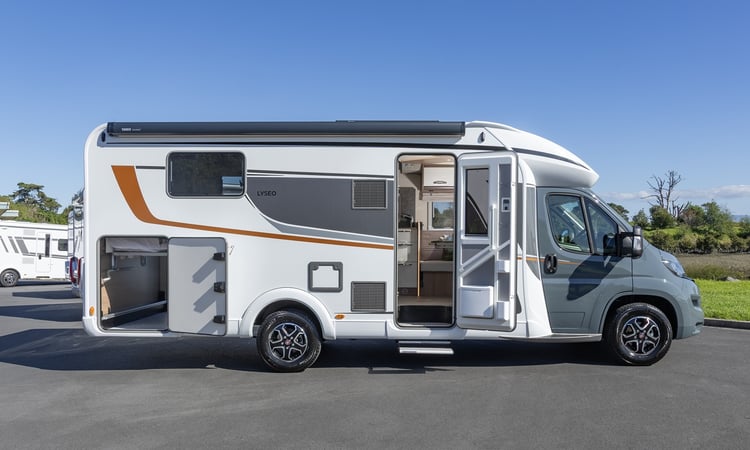
A premium motorhome's fuel economy protects your investment in two ways: it reduces what you spend every time you're on the road, and it strengthens your resale value when it's time to move on.
The numbers that compound
Modern European motorhomes built to Euro V or VI emission standards average around 11 litres per 100km. Older or less aerodynamic models can push towards 15–16L/100km. Run the maths over a typical Kiwi ownership pattern, and the costs compound fast.
At 10,000km per year, a 4L/100km efficiency difference means burning 400 extra litres annually. That's over $1,500 in additional fuel costs in a single year, before RUCs. Over five years, the gap between an efficient modern motorhome and a thirstier older one becomes a serious sum.
Efficiency feeds resale value
Fuel efficiency matters for resale value, too. An efficient engine that isn't working as hard on every climb tends to be more attractive to a prospective buyer. The next buyer will ask the same questions you should be asking now: what does it actually cost to run this thing? A modern, fuel-efficient motorhome gives you a better answer.
What are the top 7 practical driving tips to save fuel in your motorhome?
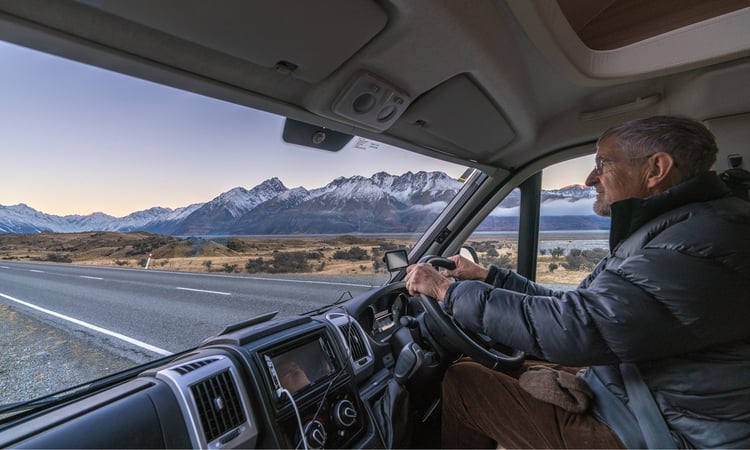
Smart driving habits like keeping a consistent speed, avoiding frequent stops and starts, and simply driving less can meaningfully cut your fuel bill – often by up to 10-15%, according to the Energy Efficiency & Conservation Authority (EECA).
Here's what works:
-
Maintain a steady speed on the motorway. Using cruise control to sit steadily between 80–90km/h is usually the ideal range for a motorhome. Because aerodynamic drag rises steeply with speed, easing back just a fraction keeps a noticeable amount of money in your wallet.
-
Switch the engine off when stationary. If you are waiting at a long set of regional roadworks or pulling over at a scenic lookout, turn the key. Idling burns through your diesel for zero kilometres gained.
-
Avoid peak-hour city traffic. Stop-start driving is where fuel economy goes to die, especially in a heavy vehicle. Time your departures and arrivals around major centres like Auckland, Wellington, Queenstown or Christchurch to dodge the heavier traffic.
-
Use the Gaspy app. Make checking the app a standard part of your pre-trip routine. Fuel prices can vary by 20–30 cents per litre between stations just a few kilometres apart. Spotting the cheapest diesel in the area before you pull onto the forecourt pays off over a long season of touring.
-
Audit your garage. Be ruthless about what you carry. Because our motorhomes come with so much built-in storage and great kitchens, it is incredibly easy to permanently hoard heavy, non-essential gear in the garage. Every extra kilogram makes your engine work harder on New Zealand's hills, so clear out the dead weight before you head away.
-
Empty your grey water. On the topic of weight, water takes up a huge amount. A motorhome’s water tank typically has around 240 kg of capacity, so the more wastewater you’re carrying around, the heavier your motorhome gets. Pull into dump stations more regularly and get rid of your grey water. This lightens your motorhome and improves fuel efficiency.
-
Drive less and see more. The simplest way to slash your running costs is to park up for longer at each destination and truly enjoy the area, rather than rushing to a new campsite every single day.
Do you want to know more about maximising your motorhome’s fuel efficiency? Check out our blog.
How does the 'slow travel' lifestyle reduce fuel costs for motorhome owners?
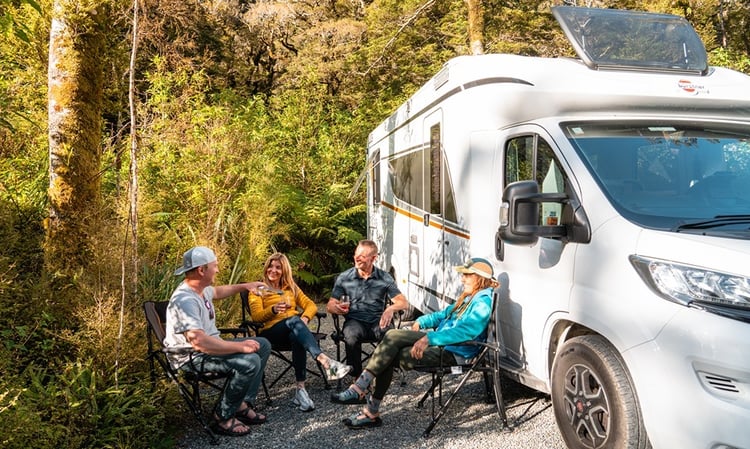
This is the single most effective fuel-saving strategy on the list, and it costs nothing: drive fewer kilometres.
It sounds obvious, but it goes against the instinct many people have when they first buy a motorhome – the urge to tick off every single corner of the country all at once. The result is long, exhausting days behind the wheel and a massive fuel bill.
Embracing slow travel flips that. Lower mileage directly reduces your diesel costs, but it also means more time actually enjoying the spots you have parked up in. As an owner, you have the advantage of time, so you can focus your budget on local experiences rather than giving it all to the service stations.
How to do slow travel the right way:
-
Lower the daily target: Aim to drive no more than 150–200km on transit days, with plenty of non-driving days in between. Our roads are winding and demanding, so planning shorter hops makes for a much more relaxed trip.
-
Immerse yourself in one region: Give a single area a week or two of your time rather than packing up and racing to a new region every couple of days.
-
Divide the islands by season: Avoid trying to rush across the Cook Strait and back in a single short trip. Dedicate entire seasons or month-long blocks to one island so you can actually savour the destinations.
Don't just take our word for it. Experienced Kiwi owners find that the real joy of ownership comes from ditching strict schedules, lowering daily mileage, and simply letting the road unfold.
Take Mark, who has spent over eight months exploring the North Island full-time. He quickly learned that motorhome living isn't about ticking off locations or racing from place to place.

Some days I might only travel 10 kilometres. It's about creating a small, capable home and using the tools available to make life on the road simpler, calmer and more enjoyable.
Fellow owner Graham shares that exact same philosophy, using his trips to explore at an unhurried, spontaneous pace.
We have map books for the North and South Islands, and we’ll highlight every road that we’ve travelled on. The freedom is unbelievable. We won’t have a plan tomorrow, and it doesn’t matter because we don’t have bookings. The only thing you worry about is the weather. The freedom to be able to do whatever you want, when you want – it’s pretty great.
How do low-profile motorhome designs save owners money at the pump?
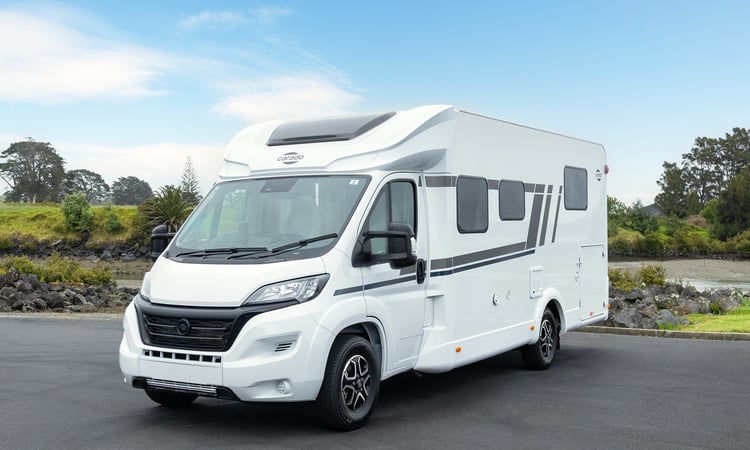
When you are looking to keep running costs down over a long season of touring, the physical shape of your motorhome plays a massive role. Cabover or luton-style motorhomes feature a large, boxy nose section that sits directly above the driver’s cab, creating a massive amount of wind resistance on the highway.
Low-profile (or semi-integrated) motorhomes ditch that bulky over-cab design completely. Instead, they feature a sleek, aerodynamic fibreglass shell that transitions smoothly from the original van cab into the living area.
This streamlined design cuts down on fuel costs in a few ways:
-
Reduced drag on the highway: A lower roofline means a smaller frontal area pushing against the wind, so the engine doesn't have to work as hard to maintain speed. We break down exactly why this matters more than people expect in the next section below.
-
Better handling in Kiwi crosswinds: High-profile motorhomes act like a sail, catching strong crosswinds on exposed New Zealand roads and forcing the driver to constantly correct the steering – a habit that burns extra fuel. A low profile keeps the vehicle stabilized and tracking straight with minimal effort.
-
Zero sacrifice on interior space: You might think lowering the roof means losing beds, but modern European low-profiles use clever engineering, like electric drop-down beds that store flush against the ceiling during the day. You get the fuel-saving benefits of a smaller, more aerodynamic silhouette without having to settle for a smaller living space.
Aerodynamics vs. Weight: What actually drives long-term fuel efficiency for New Zealand motorhome owners?
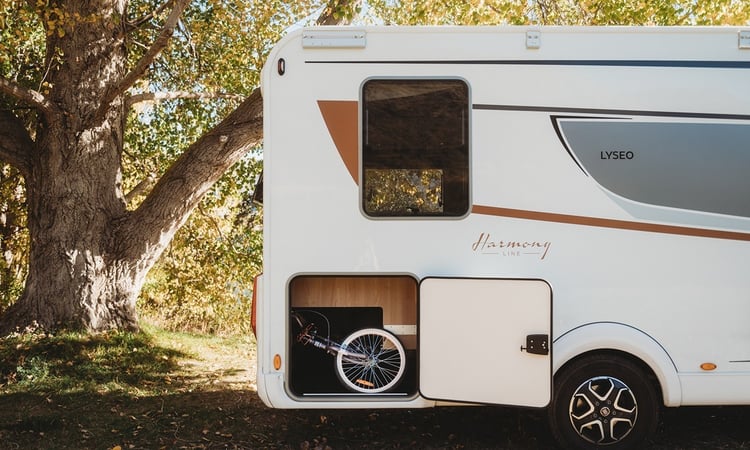
When people picture a fuel-hungry motorhome, they usually blame the engine. In reality, two physical forces do most of the damage: aerodynamic drag and weight. Understanding when each one matters helps explain why some motorhomes are so much cheaper to run – and how your own choices affect the bill.
Aerodynamics: the highway factor
A larger frontal area creates more drag, and drag increases exponentially with speed. Double your speed and the air resistance doesn't double – it roughly quadruples. That means a boxy or tall profile (like a traditional cabover) costs you more and more the faster you go.
Where you'll feel it most:
-
Long open-highway stretches at 90–100km/h
-
Exposed alpine crossings like the Crown Range or Lewis Pass, where headwinds and crosswinds add to the resistance
Weight: the hill-climb factor
Weight matters most at lower speeds and on climbs, where every extra kilogram is something the engine has to physically push uphill. New Zealand has a lot of uphill, which is exactly why packing light is something to bear in mind.
The takeaway: you can't change the laws of physics, but you can choose a vehicle designed around them – sleek, low-profile, built on a light European base – and you can control what you load into it.
Want a full breakdown of how much it costs to own a motorhome? Check out our in-depth cost of ownership calculator.


